
What does it mean to place a bag of rice on top of a coffin?
At some funeral ceremonies, people may notice a bag of rice placed on top of the coffin. Many assume this is a traditional Cantonese Taoist custom, but in fact, this practice is not part of traditional Cantonese Taoist funeral rituals. It is a custom that originates from other regions or dialect groups.
Usually, the bag of rice is prepared by the eldest son or a filial child and placed on the coffin.
The act of placing rice on the coffin generally carries several symbolic meanings:
1️⃣ Providing food for the deceased’s journey
It symbolizes that the deceased will not lack food on their journey to the afterlife.
2️⃣ A symbol of continued support from descendants
It represents that the descendants are capable of honoring and supporting their ancestors, and that the family will continue to live in stability and prosperity.
3️⃣ Rice symbolizes life and blessings
In Chinese culture, rice represents life, sustenance, wealth, and good fortune.
4️⃣ Passing blessings to the descendants
In some traditions, before the burial, the sons and daughters divide the rice and bring some home, symbolizing bringing blessings and prosperity back to their households.
In certain places, people may also place the following items inside the rice:
- Coins
- Joss paper
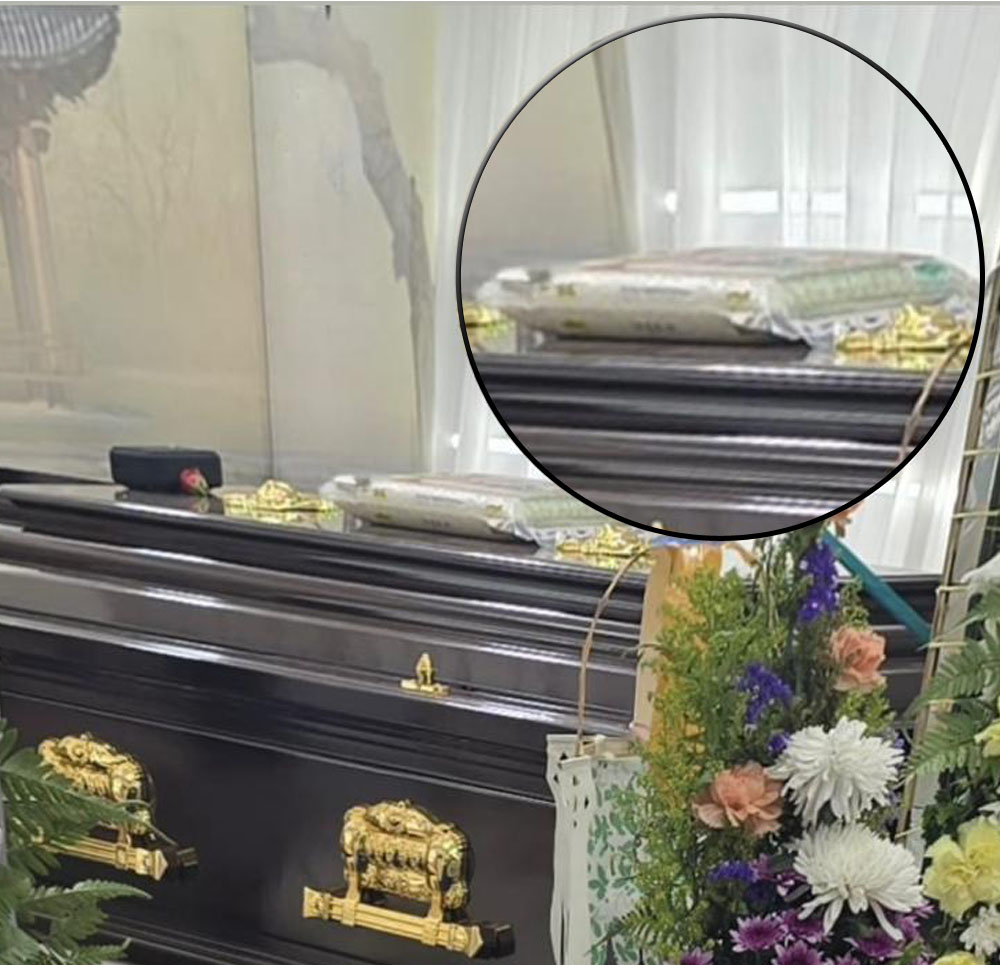
These practices vary according to the customs of different regions.
The above information is shared for general reference.
棺材上放一包米是什么意思?
有些人在丧事仪式中会看到,棺木上放着一包米。很多人以为这是广东的传统习俗,但其实在传统的广东丧事仪式中,并没有这样的做法。这种习俗一般是来自其他籍贯或地区的传统。
通常,这一包米会由长子或孝子准备,放在棺木上。
“棺木上放米”主要有以下几种象征意义:
1️⃣ 给亡者“带粮上路”
象征逝者在前往另一个世界的路途中,不会缺少食物。
2️⃣ 象征后代供养不断
表示子孙有能力供养祖先,也寓意家族生活稳定、后代兴旺。
3️⃣ 米象征生命与福气
在华人文化中,米代表生命、粮食和财富,也象征福气与生气。
4️⃣ 把福气留给子孙
在一些地方的习俗中,出殡前孝子孝女会把米分开,各自带回家,寓意把福气和粮食带回家中。
另外,有些地方还会在米里面放入:
- 铜钱
- 银纸
这些都是不同地区流传下来的习俗做法。
以上内容仅供大家参考。


